🔐 Cyber Renaissance – Reclaiming Control in the Age of AI I had the opportunity to attend BE-CYBER 2026…
Schomer — Principal Security Solutions Architect & Founder
Reshared from a post by Patrick B.
🔐 Cyber Renaissance – Reclaiming Control in the Age of AI
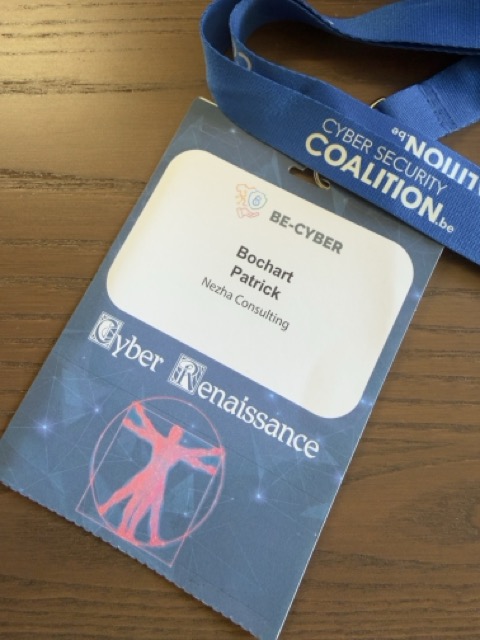
I had the opportunity to attend BE-CYBER 2026 – Cyber Renaissance in Wavre this week.
It was a particularly insightful day, with a broad range of topics, excellent speakers and, just as importantly, valuable conversations among fellow cybersecurity professionals.
Beyond the individual sessions, one message stood out to me:
AI is changing not only what we can do in cybersecurity, but also what we need to secure.
A few key takeaways from the day:
▸ From “Human in the Loop” to “Human in Command”
Keeping a human involved is no longer enough. As AI advances in analysis, recommendation and action, we must ensure that human judgement, accountability and the ability to challenge decisions remain in control.
▸ Agentic AI introduces a fundamentally different attack surface
When AI systems access data, retain memory, invoke tools and execute actions, securing the model is only part of the equation. Context, permissions, memory, integrations and actions also form part of the threat model.
▸ AI is accelerating the vulnerability lifecycle — for defenders and attackers alike
AI has significant potential for code review, vulnerability detection, testing and incident analysis. However, adversaries can also accelerate their activities. The real challenge is not just identifying and fixing vulnerabilities, but doing so faster than attackers can exploit them.
▸ Identity can no longer be trusted simply because it looks or sounds convincing
Deepfakes, synthetic voices and increasingly sophisticated digital identities are challenging assumptions behind remote verification. For sensitive operations, strong authentication and independent verification channels are becoming increasingly important.
▸ Digital sovereignty is also about resilience and dependency
The question is not merely where a provider or its infrastructure is located. Jurisdiction, technical dependencies, exit strategies, portability and the ability to continue operating when a critical service becomes unavailable are equally important considerations.
Perhaps my strongest takeaway is that digital trust increasingly needs to be demonstrated rather than assumed.
AI will undoubtedly help us detect, analyse and respond more quickly. However, it also requires us to rethink identity, access, traceability, testing, governance and accountability.
The objective should not be to resist automation, but to use it without surrendering control.
AI can assist. AI can accelerate. AI can automate. But humans must remain in command.
Many thanks to the Belgian Cyber Security Coalition, the speakers and everyone I had the pleasure of meeting and exchanging ideas with during this very worthwhile day.
#CyberSecurity #ArtificialIntelligence #AgenticAI #CyberRisk #DigitalTrust #InformationSecurity #HumanInCommand #CyberRenaissance #NezhaConsulting
0 reactions · 0 comments