📢 Shared from CyberShift 🔐 Understanding the Incident Response Lifecycle - and why it matters. One framework…
Innocent A. — Cybersecurity Analyst
📢 Shared from CyberShift
🔐 Understanding the Incident Response Lifecycle - and why it matters.
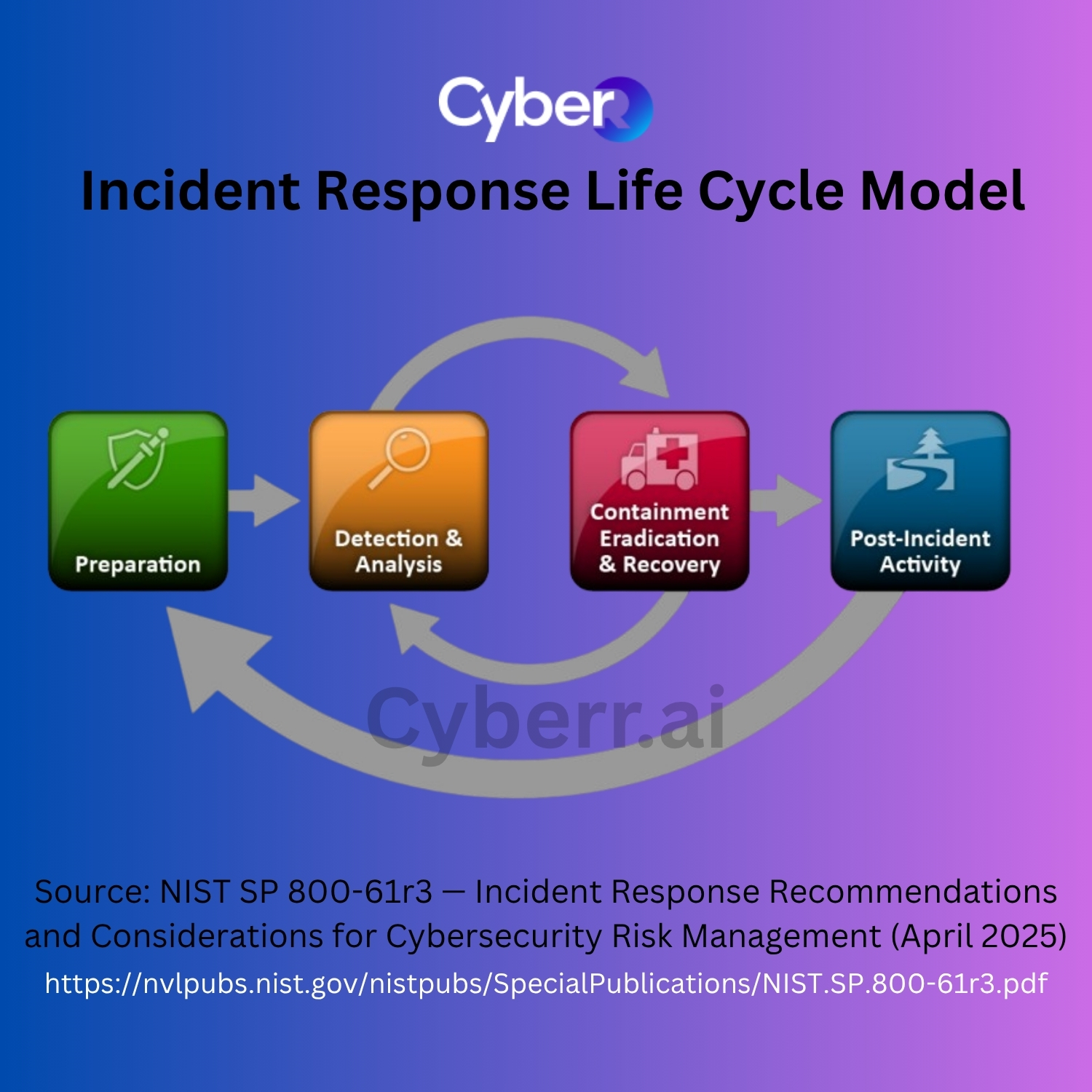
One framework every cybersecurity professional should know is the NIST Incident Response Lifecycle (SP 800-61r3). It breaks down how organizations should handle cybersecurity incidents across four key phases:
🟢 Preparation - Building the policies, tools, and team capabilities before an incident ever occurs. This is where the real work happens.
🟠 Detection & Analysis - Identifying that something is wrong and understanding its scope. Speed and accuracy here can make or break a response.
🔴 Containment, Eradication & Recovery - Stopping the spread, removing the threat, and restoring normal operations safely.
🔵 Post-Incident Activity - Learning from what happened. This phase feeds back into Preparation, making the cycle continuous and is not linear.
What I find most powerful about this model is the feedback loop. Security isn't a one-time fix. Every incident teaches you something that makes your defenses stronger.
As I continue building my skills in cybersecurity, frameworks like NIST SP 800-61r3 remind me that structured thinking is just as important as technical skill.
Source: NIST SP 800-61r3 : Incident Response Recommendations and Considerations for Cybersecurity Risk Management (April 2025)
#CyberShift #Cybersecurity #IncidentResponse #NIST #BlueTeam #CyberSecurity #InfoSec #CareerDevelopment #LearningInPublic
2 reactions · 0 comments
Topics: #blueteam, #infosec, #learninginpublic, #incidentresponse, #cybershift, #nist, #cybersecurity, #careerdevelopment