Posted in GRC
📢 Shared from Cybersecurity Governance & Executive Accountability EXECUTIVE DECISION SCENARIO | #4 The…
Victor Font — Keynote Speaker | Strategic Technology Leader | Fractional CIO | IT & Cyber Governance Expert | Published Author | FedRAMP Readiness | Board-Level Advisor | Digital Transformation | Enterprise WordPress/Formidable Forms
📢 Shared from Cybersecurity Governance & Executive Accountability
EXECUTIVE DECISION SCENARIO | #4
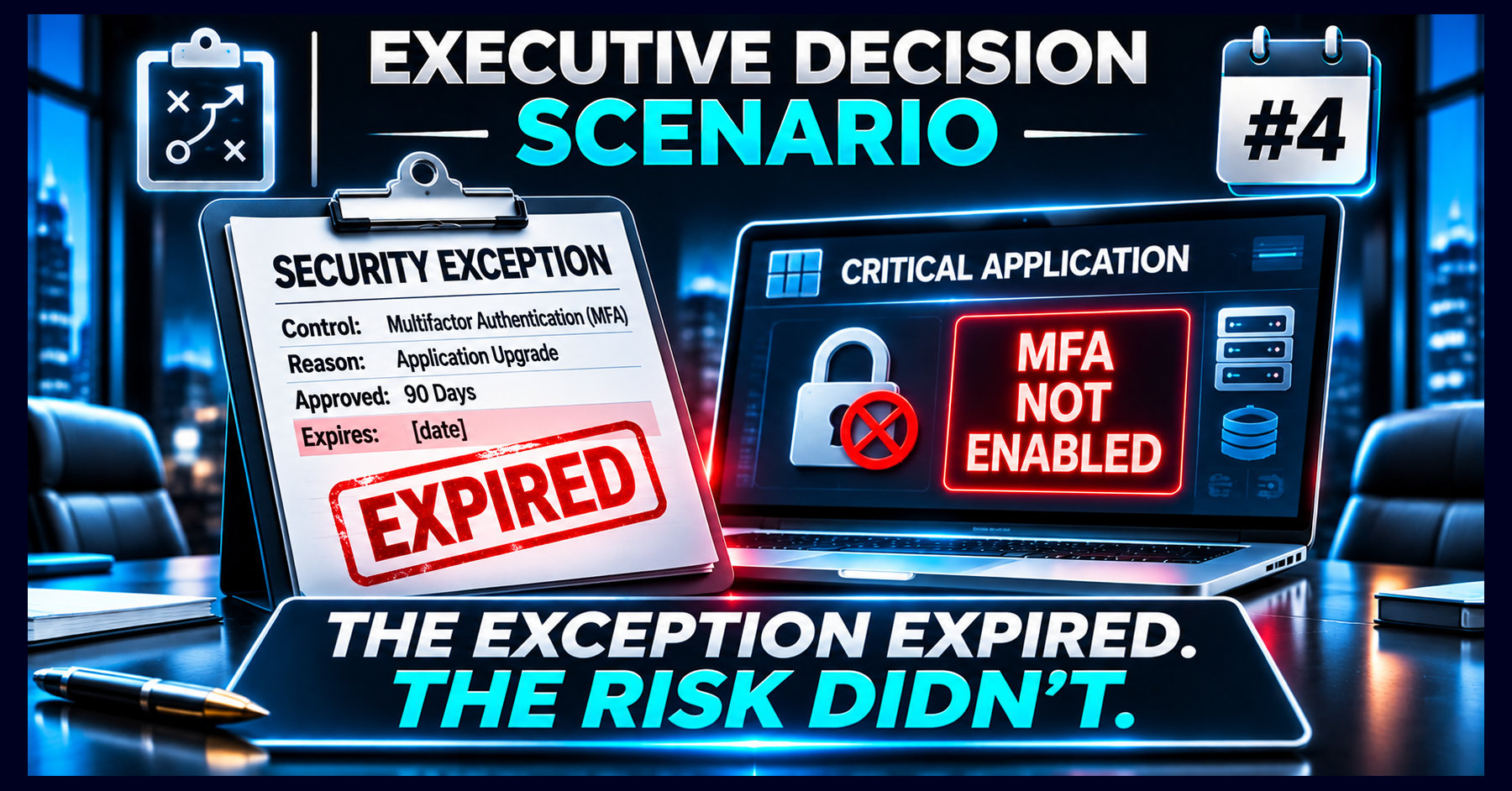
The Security Exception Expired. The System Is Still Running.
Six months ago, a business executive received approval to operate a critical application without meeting the organization's multifactor authentication requirement.
The exception was documented, assigned an owner, and approved for 90 days while the application was upgraded.
Ninety days passed.
The upgrade was delayed.
The exception expired.
Three months later, an internal auditor discovers that the application is still operating without MFA. No renewal was approved, no reassessment was performed, and no one escalated the expired exception.
The business executive insists the original approval remains valid because the upgrade is still underway.
The CISO argues that the organization is now operating outside its authorized risk tolerance.
Here's the governance dilemma:
The original decision was authorized. Continued operation was not.
Who is accountable for allowing the exception to become an unmanaged exposure?
A. The business executive who owns the application and accepted the original risk.
B. The CISO, whose security governance process failed to identify and escalate the expiration.
C. The CIO, whose team failed to complete the promised remediation.
D. All three, with different responsibilities for risk ownership, remediation, and governance oversight.
One more question:
Should an expired security exception automatically trigger enforcement, or should the organization permit temporary continued operation while an authorized risk owner reassesses the exposure?
An exception is a time-bound governance decision—not permanent permission to disregard a security requirement.
How does your organization prevent temporary exceptions from becoming permanent vulnerabilities?
#CybersecurityGovernance #ExecutiveAccountability #CyberRisk #GRC #RiskAcceptance #SecurityExceptions #DecisionAuthority #Governance
2 reactions · 0 comments
Topics: #cyberrisk, #securityexceptions, #governance, #decisionauthority, #cybersecuritygovernance, #executiveaccountability, #riskacceptance, #grc