CVE-2026-87902: The interesting part isn't the CVSS score. It's the speed of exploitation. WordPress…
Esla K. — CyberOps Community Lead
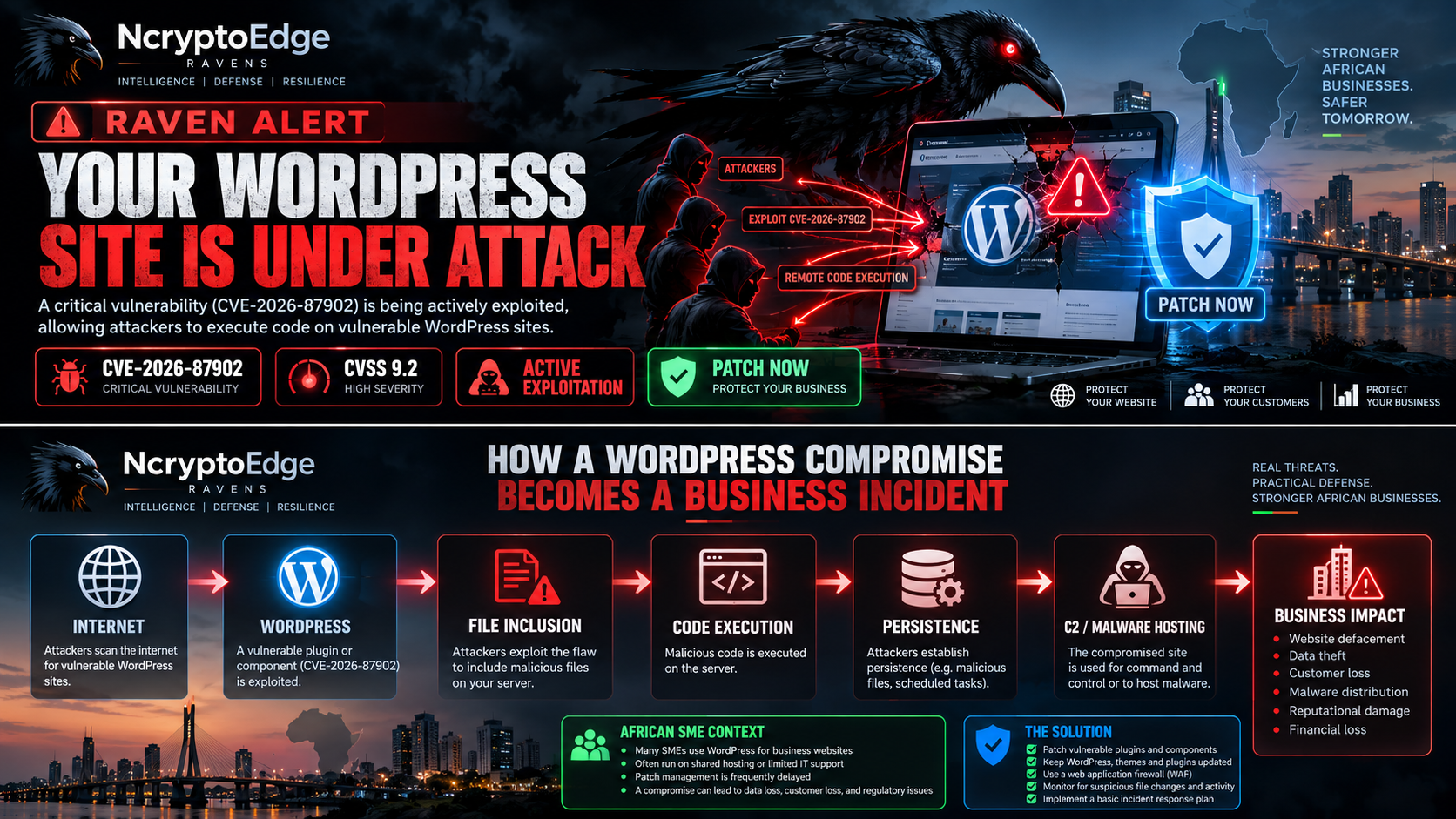
CVE-2026-87902: The interesting part isn't the CVSS score. It's the speed of exploitation.
WordPress released 7.1.2 on September 22 to fix an unauthenticated path-traversal/LFI vulnerability in page-template resolution.
Under specific theme + server conditions, the flaw can progress to RCE.
What caught my attention:
Patch released → exploitation observed within hours → attackers progressed toward PHP file writes.
Patchstack documented requests targeting ordinary WordPress core files for reconnaissance, followed by attempts involving pearcmd.php and file creation. �
Patchstack
That creates an interesting detection problem.
A simple:
"Did someone request the vulnerable parameter?"
detection is weak.
I'd rather correlate:
Suspicious WordPress request
Unexpected PHP file creation
Web server → shell/process execution
=
High-confidence investigation candidate
This is the kind of problem I'm interested in building around at NcryptoEdge:
Threat intelligence → detection engineering → validation → reusable defensive artifact.
I'm currently thinking about the Wazuh/Sigma side of this.
Question for defenders:
If you had WordPress + Apache/nginx + PHP-FPM telemetry available, what would you correlate first to distinguish exploitation from normal WordPress activity?
🐦⬛
3 reactions · 0 comments