The Prince of Cybersecurity A Machiavellian Look at Defense When the cybersecurity field looks for…
Kevin P. — Solutions Architect - Infrastructure and Operations Transformation
The Prince of Cybersecurity
A Machiavellian Look at Defense
When the cybersecurity field looks for historical philosophy, it often points to the modern concept of Zero Trust (popularized and commercialized around 2010–2012). Zero Trust was born from the realization that traditional perimeter security relying on a hardened exterior and a "trusted" interior was fundamentally flawed. Today, most cybersecurity frameworks are built on these types of practical defensive measures designed to protect our digital environments and each other.
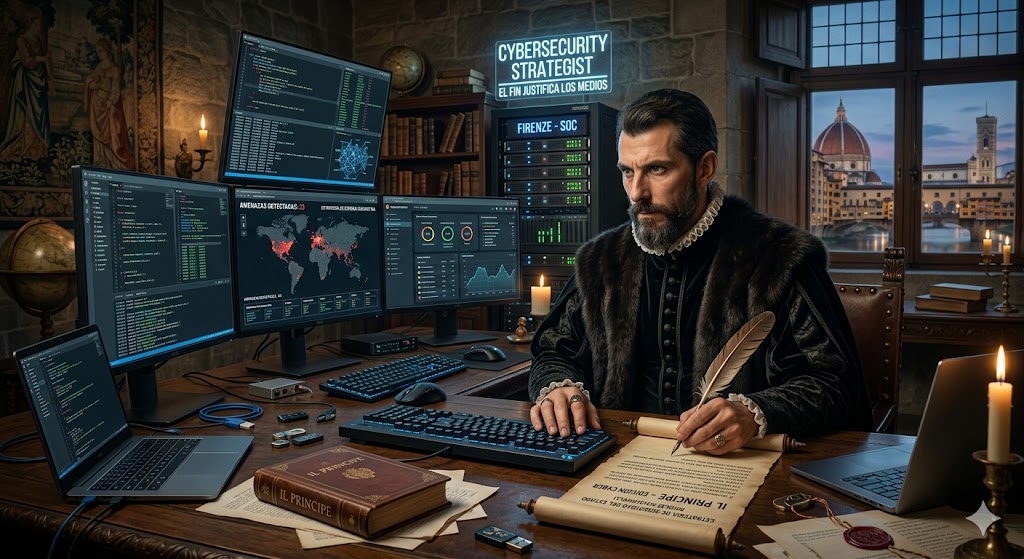
The core philosophy of Zero Trust is often oversimplified as "trust nobody." However, I believe a truer philosophical ancestor for cybersecurity maturity can be found much earlier: in Niccolò Machiavelli’s 1532 masterpiece, The Prince.
True cybersecurity maturity doesn't just come from following a checklist of best practices; it comes from a profound, realistic understanding of human nature and technology. It is the realization that we must be hyper-vigilant about everything we code, build, or configure. Every creation is a double-edged sword that can (and often will) be turned against its creator.
We see this cycle constantly in the industry. Good engineers face an attack, learn from the breach, and implement remediation (now orchestrated and also AI based). These lessons are then institutionalized as the "best practices" we share across the field since the beginning. But a truly Machiavellian defender doesn't just react to the attack. They build systems under the assumption that the environment is inherently hostile, political, and fragile, recognizing that security is not a permanent state of peace, but a continuous state of calculated defense.
1 reactions · 0 comments