🚀 Cybersecurity Careers: Which Path Is Right for You? With the rapid growth of digital transformation…
SHERIF E. — Cyber Security Analyst
🚀 Cybersecurity Careers: Which Path Is Right for You?
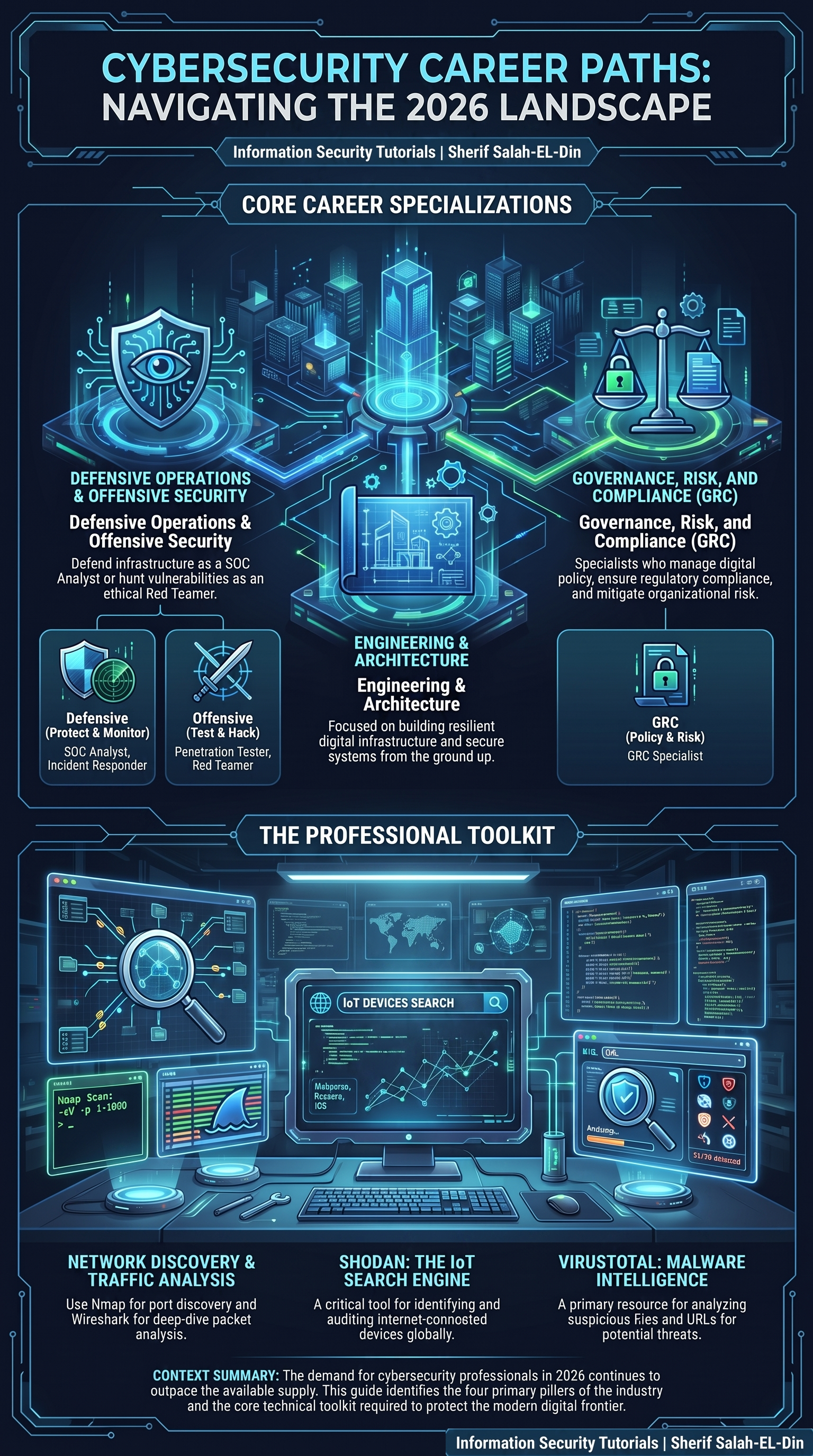
With the rapid growth of digital transformation, Cybersecurity is no longer a single job—it has evolved into a diverse field with numerous specialized career paths. Each specialization has its own responsibilities, skill set, and career progression. If you're planning to enter the cybersecurity industry, understanding these roles will help you choose the path that best matches your interests and long-term goals.
🛡️ SOC Analyst
A SOC Analyst serves as the first line of defense within an organization. Their primary responsibility is monitoring security alerts, analyzing events using SIEM solutions, detecting suspicious activities before they escalate into real attacks, investigating security incidents, containing threats, and collaborating with incident response teams to maintain a secure environment.
🔍 Penetration Tester (Ethical Hacker)
If you enjoy thinking like an attacker and discovering security weaknesses, this role is for you. A Penetration Tester simulates real-world cyberattacks against systems, applications, and networks to identify vulnerabilities before malicious actors can exploit them. They then provide detailed reports with risk assessments and practical remediation recommendations.
🌐 Network Security Engineer
A Network Security Engineer is responsible for securing an organization's network infrastructure by designing and implementing security solutions such as Firewalls, VPNs, and IDS/IPS. They also ensure secure connectivity between locations, minimize unauthorized access, and maintain high availability of network services.
🖥️ System Security Engineer
This role focuses on protecting operating systems and servers, including both Windows and Linux environments. Responsibilities include managing security updates, hardening systems, securing services, managing user permissions, reducing the Attack Surface, and ensuring system stability and reliability.
☁️ Cloud Security Engineer
As organizations increasingly adopt cloud technologies, Cloud Security Engineers have become highly sought after. They secure environments hosted on AWS, Microsoft Azure, and Google Cloud, protecting cloud infrastructure, applications, and data while managing identities, access controls, and security best practices.
🧑💻 Application Security Engineer
An Application Security Engineer integrates security throughout the software development lifecycle. They perform secure code reviews, identify vulnerabilities, and implement Secure Software Development Lifecycle (SSDLC) practices to ensure applications are built securely from the ground up.
🚨 Incident Responder
When a cyberattack occurs, the Incident Responder takes charge of containing the incident, investigating its root cause, minimizing business impact, restoring affected systems, and producing comprehensive reports to help prevent similar incidents in the future.
🔬 Digital Forensics Analyst
Following a security incident, a Digital Forensics Analyst collects and analyzes digital evidence using forensic methodologies to determine how the compromise occurred, identify attacker activities, and preserve evidence for legal or investigative purposes.
🎯 Threat Hunter
Unlike traditional monitoring roles, a Threat Hunter proactively searches for hidden threats within an organization's environment. By analyzing Logs, Threat Intelligence, and user and device behavior, they identify advanced attacks before they can cause significant damage.
📋 GRC Specialist
If you're interested in governance and compliance rather than technical operations, Governance, Risk & Compliance (GRC) may be the ideal path. GRC specialists manage organizational risks, develop security policies, ensure compliance with international standards such as ISO/IEC 27001 and the NIST Cybersecurity Framework, and support audits and regulatory requirements.
🧠 Security Architect
A Security Architect is a senior cybersecurity professional responsible for designing an organization's overall security architecture, selecting appropriate security technologies, and developing long-term strategies to protect critical systems and sensitive data.
🎯 Which Career Should You Choose?
There is no single "best" cybersecurity specialization—only the one that best aligns with your skills, interests, and career aspirations. Every cybersecurity role plays a vital part in protecting organizations and individuals. By building a strong foundation in Networking, Operating Systems, and Cybersecurity Fundamentals, you'll be well prepared to pursue the specialization that fits your goals.
📚 Want to start your cybersecurity journey the right way?
Follow Information Security Tutorials for free cybersecurity courses, hands-on labs, practical demonstrations, and structured learning paths designed to help you progress from beginner to professional.
🔔 Follow Information Security Tutorials and join our growing community of cybersecurity enthusiasts and professionals!
#CyberSecurity #InformationSecurity #CyberSecurityCareers #SOCAnalyst #EthicalHacking #PenetrationTesting #NetworkSecurity #CloudSecurity #ApplicationSecurity #IncidentResponse #DigitalForensics #ThreatHunting #GRC #SecurityArchitect #BlueTeam #RedTeam #CyberDefense #InfoSec #Networking #ITSecurity #Technology #Learning #CareerDevelopment #InformationSecurityTutorials
2 reactions · 0 comments
Topics: #securityarchitect, #digitalforensics, #blueteam, #itsecurity, #informationsecurity, #threathunting, #ethicalhacking, #cloudsecurity, #applicationsecurity, #penetrationtesting