Posted in AI Security
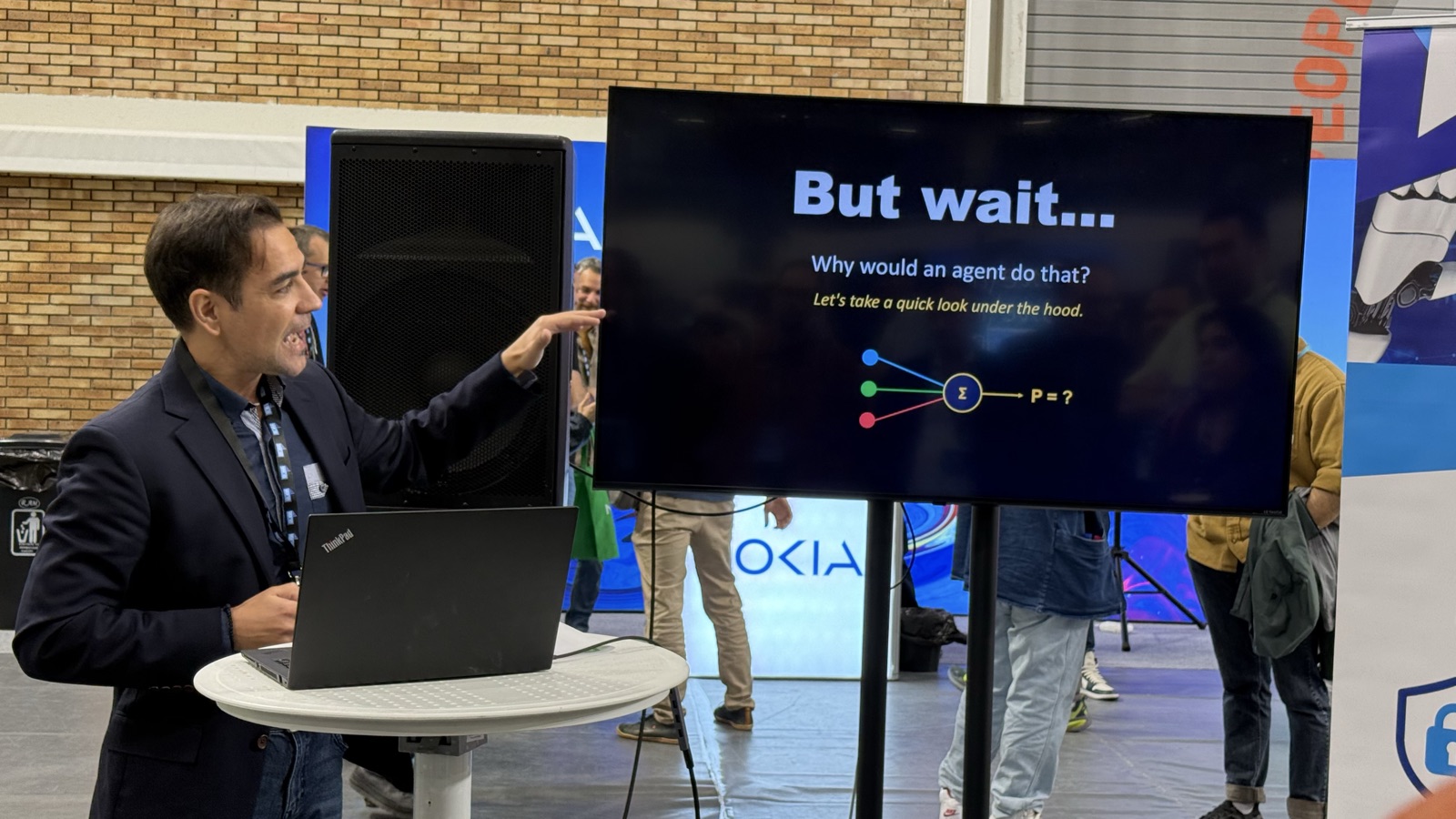
Top-class presentation by Marinos Bekios at Open Conf 2026, titled “When Your Agent Becomes Evidence.” A…
Ilias Mavropoulos — Senior Penetration Tester @ TP | PenTest+ • eWPT • ISO/IEC 27001 Lead Auditor | MBA Candidate, Cybersecurity & Governance | MSc Cybersecurity
Top-class presentation by Marinos Bekios at Open Conf 2026, titled “When Your Agent Becomes Evidence.”
A very interesting perspective on AI agents, digital forensics, and the challenges of establishing accountability when autonomous systems take actions on our behalf.
🔍 Key takeaways:
* AI agents need forensic readiness. Traditional audit logs may tell us what happened, but not necessarily why an agent acted or who authorized it.
* Seven critical investigative questions: Who set the goal? Which model ran? What permissions were granted? Whose identity acted? What was approved? What context was ingested? What actually executed?
* Identity and least privilege matter. Every agent should have a unique identity, clearly defined permissions, and no shared API keys.
* Context is evidence. Prompts, retrieved documents, memory, and external inputs must be preserved to investigate incidents, including prompt injection.
* Approval and execution must be traceable. Record who authorized an action, which policy applied, the exact tool calls, their arguments, and their results.
* Integrity alone isn’t enough. Tamper-resistant logs cannot reconstruct events that were never recorded in the first place.
Forensic readiness for AI agents must be designed before an incident occurs, not after.
As AI agents become increasingly autonomous, accountability, observability, and evidence preservation need to evolve alongside them.
Great presentation connecting AI security, governance, and digital forensics!
2 reactions · 0 comments