Moving from Reactive to Proactive: Engineering a Zero Trust Ecosystem in Microsoft 365 E5 🛡️ I recently…
Shubhanshu S. — Assistant Manager / Technical Project Manager
Moving from Reactive to Proactive: Engineering a Zero Trust Ecosystem in Microsoft 365 E5 🛡️
I recently completed a deep-dive security project focused on building a robust Incident Response Lifecycle within the Microsoft Defender XDR stack. It’s one thing to have security tools; it’s another to engineer them to catch advanced threats before they reach the inbox.
Project Highlights:
🔹 Security Engineering: I moved beyond default settings to implement high-tier Safe Attachments and Safe Links policies, ensuring a strict "Block & Admin-Only Quarantine" workflow.
🔹 Threat Simulation: To validate my architecture, I conducted controlled malware attacks using custom-hashed EICAR payloads, bypassing standard signature caches to test real-time sandboxing.
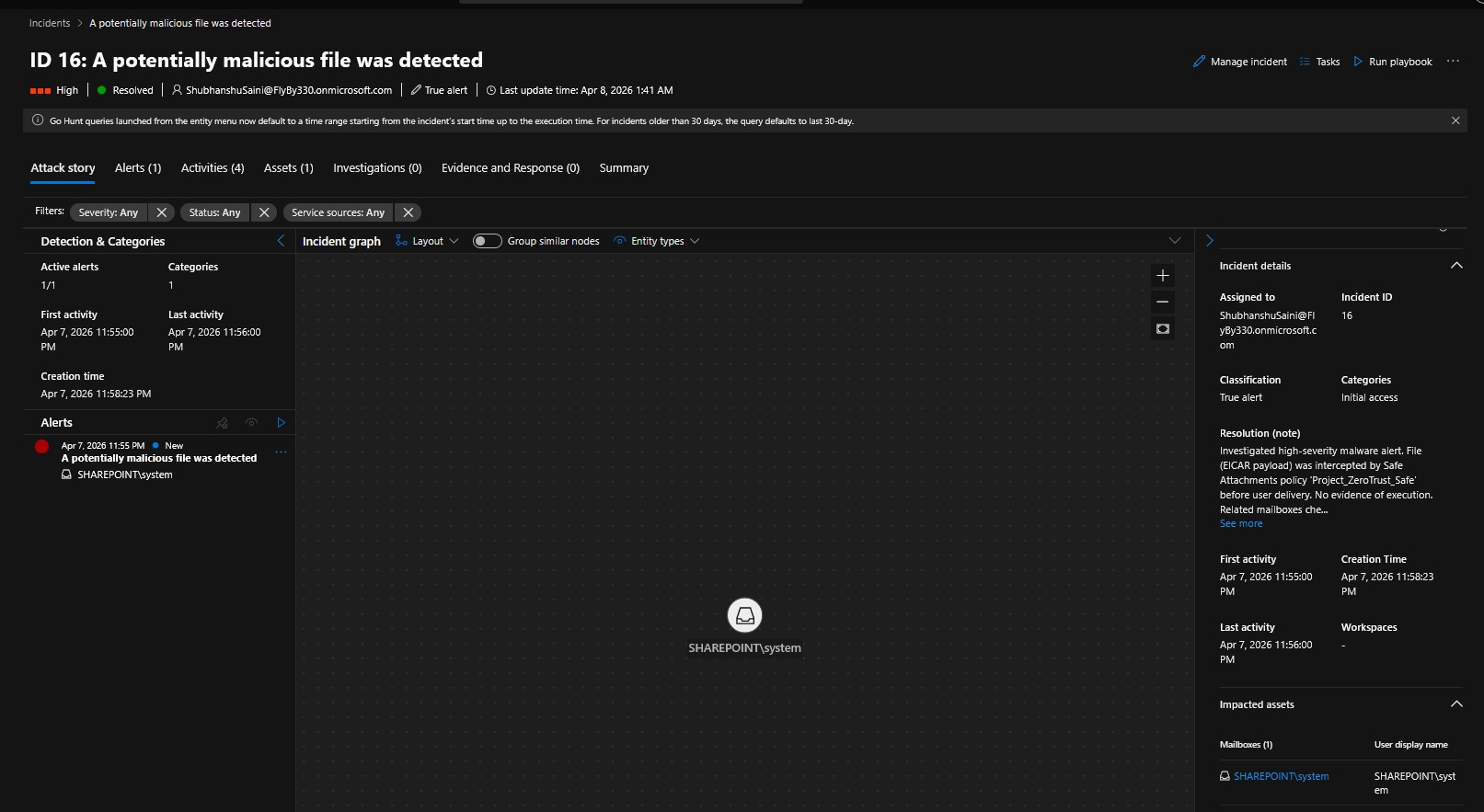
🔹 Incident Investigation (ID 13): I managed the full lifecycle of a high-severity alert. Using the Attack Story graph, I correlated data across multiple entities (Sender, Payload, and Recipient) to provide a complete forensic map of the attack path.
🔹 Operational Hardening: I identified and resolved critical gaps in default logging by tuning Unified Audit Logs and Alert Policies, achieving 100% visibility for the SOC team.
Key Technical Takeaway:
Effective XDR isn't just about detection—it’s about correlation. By integrating Entra ID P2 identity protection with Defender for Office 365, I established a defense-in-depth posture that neutralizes threats at the gate.
I’m excited to bring this hands-on experience in Incident Response and Security Engineering to a forward-thinking SOC team!
#CyberSecurity #Microsoft365 #DefenderXDR #IncidentResponse #SOCAnalyst #ZeroTrust #CloudSecurity #ThreatHunting #InfoSec
#MicrosoftSecurity
2 reactions · 0 comments
Topics: #threathunting, #microsoft365, #defenderxdr, #cloudsecurity, #infosec, #microsoftsecurity, #incidentresponse, #socanalyst, #zerotrust, #cybersecurity