Identity Is the New Perimeter: A Defensive Look Inside Scattered Spider During my latest cybersecurity…
Haydn K. — Lead Community Operator
Identity Is the New Perimeter: A Defensive Look Inside Scattered Spider
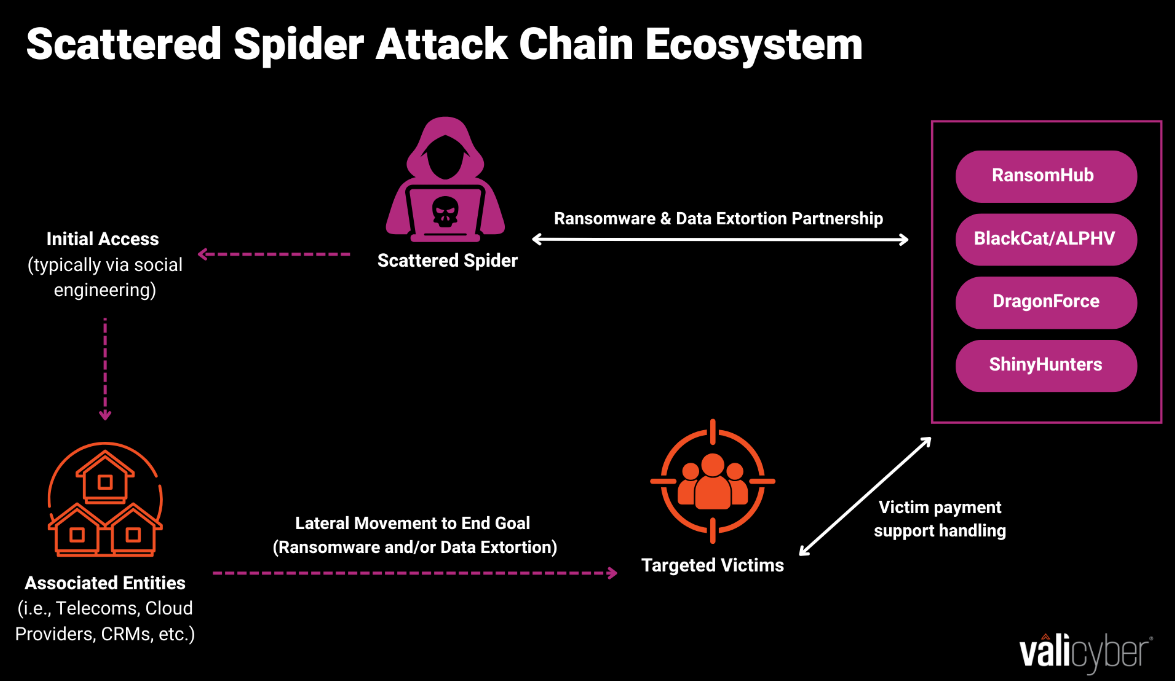
During my latest cybersecurity research, I focused on analyzing the multi-stage attack chain utilized by modern social engineering syndicate Scattered Spider. Because their tactics bypass traditional endpoint boundaries by attacking the identity layer first, mitigating this risk requires an architecture that treats identity as your primary security perimeter.
The implementation focuses on eliminating legacy authentication fallbacks, securing the help desk pipeline, and ensuring continuous visibility into identity telemetry. Here are the core phases of the defensive framework:
Identity Hardening and Phishing Resistance: Standard push notifications and SMS authentication are highly vulnerable to fatigue campaigns and SIM swapping. The first phase of this architecture involves implementing custom authentication strengths within Okta and Entra ID to restrict corporate access exclusively to hardware-bound, phishing-resistant passkeys and FIDO2 tokens.
Help Desk Structural Controls: To eliminate the risk of human manipulation, the IT service desk must be decoupled from manual MFA resets. By integrating ticket systems directly with identity providers, technicians cannot physically trigger a credential or device reset without an out-of-band verification token being validated and logged, removing social engineering from the equation.
Telemetry Ingestion and Ingress Filtering: Detecting sophisticated identity tracking requires ingesting comprehensive directory system logs into a centralized SIEM. By establishing dynamic network zones, the environment actively drops authentication requests originating from residential proxies and commercial VPNs, stripping attackers of the anonymity they rely on to blend in.
Behavioral Endpoint Tracking: Once an attacker compromises an identity, they live off the land using native utilities. This framework implements strict application allowlisting to block unauthorized remote monitoring and management tools, alongside EDR rules designed to flag memory dumps and volume shadow copy deletions immediately.
The full architectural write-up, including the step-by-step policy configurations and the companion purple team assessment scorecard, is documented in my repository here:
https://github.com/HaydnZK/Research-and-Methodology/tree/main/Scattered_Spider_CTI
5 reactions · 0 comments