Posted in GRC
📢 Shared from Cybersecurity Governance & Executive Accountability THE GOVERNANCE CHALLENGE | #2 The Audit…
Victor Font — Keynote Speaker | Strategic Technology Leader | Fractional CIO | IT & Cyber Governance Expert | Published Author | FedRAMP Readiness | Board-Level Advisor | Digital Transformation | Enterprise WordPress/Formidable Forms
📢 Shared from Cybersecurity Governance & Executive Accountability
THE GOVERNANCE CHALLENGE | #2
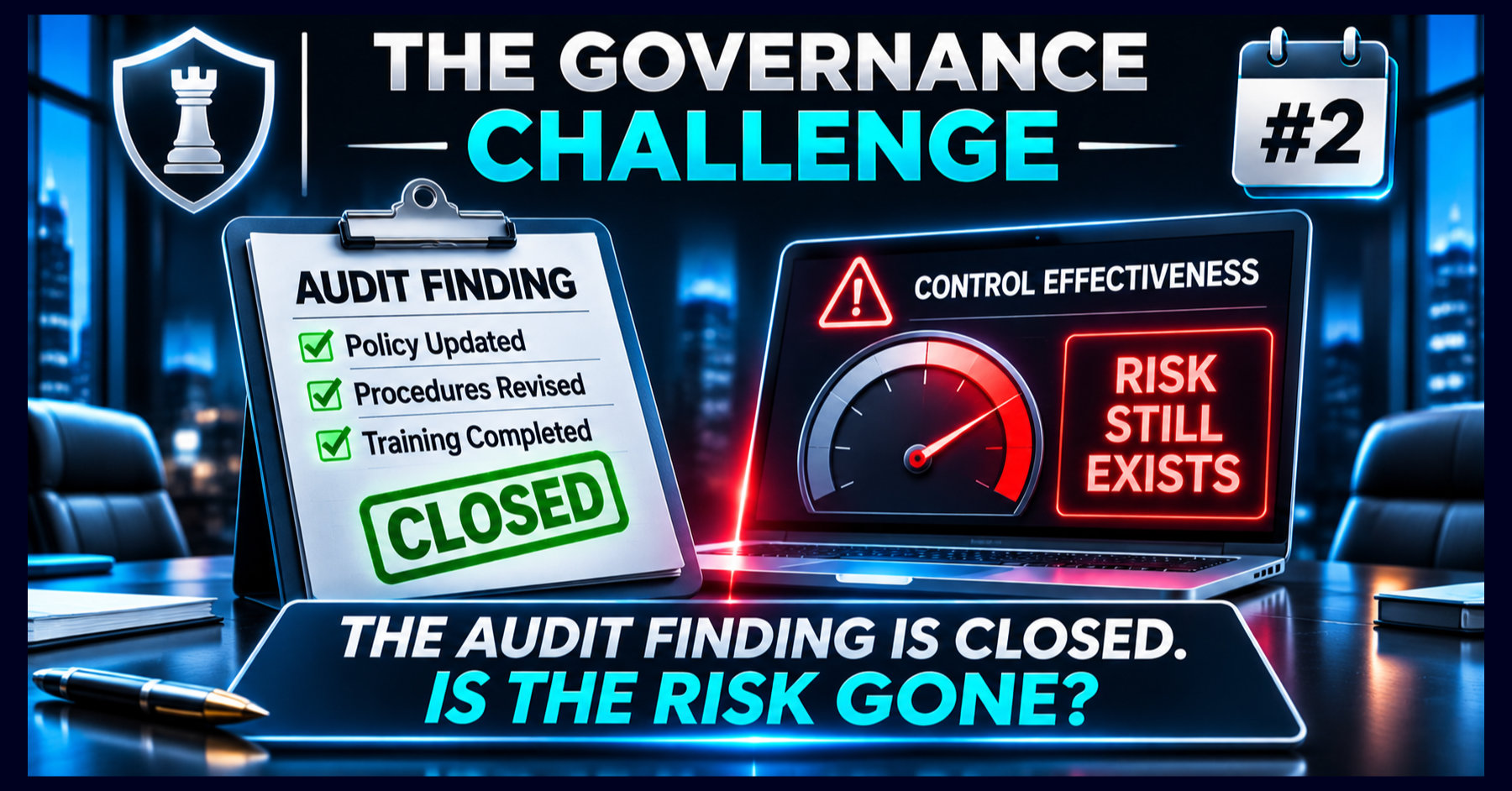
The Audit Finding Is Closed. Is the Risk Gone?
An internal audit identifies a significant cybersecurity control weakness.
Management agrees to remediate it within 90 days.
Three months later, the responsible executive submits documentation showing that a new security policy has been approved, procedures updated, and employees trained.
The finding is marked CLOSED.
Six months later, another assessment discovers the same underlying weakness.
The policy exists. The training occurred. The documentation is complete.
But the control still isn't working.
Here's the governance problem:
Management demonstrated that corrective actions were completed. Nobody established whether those actions actually reduced the risk.
Today's question:
Who should have the final authority to close a cybersecurity audit finding?
A. The control owner, who implemented the corrective action.
B. The CISO, who is responsible for cybersecurity oversight.
C. Internal Audit, after independently validating that the corrective action addressed the finding.
D. The designated risk authority, who can accept any remaining exposure within established limits.
Or does your organization distinguish between closing the audit finding and accepting the residual risk?
I'm particularly interested in how organizations verify that remediation was effective—not merely documented.
Because closing a finding is an administrative action. Reducing risk is an operational outcome.
#CybersecurityGovernance #ExecutiveAccountability #InternalAudit #GRC #RiskManagement #CyberRisk
1 reactions · 1 comments
Topics: #cyberrisk, #cybersecuritygovernance, #executiveaccountability, #internalaudit, #riskmanagement, #grc
Comments
Ilias M.: I’d say C. Management implemented a policy, updated procedures, and trained employees. However, none of these activities proved that the underlying security weakness was resolved. Internal Audit should independently verify that: -The root cause has been addressed. -Corrective actions have been implemented. -The control operates effectively. -The original finding no longer exists. Only then should