I recently came across a payment flow that exposed something it absolutely shouldn’t. Not card data. Not…
Damian K. — Penetration Tester / Offensive Security Engineer
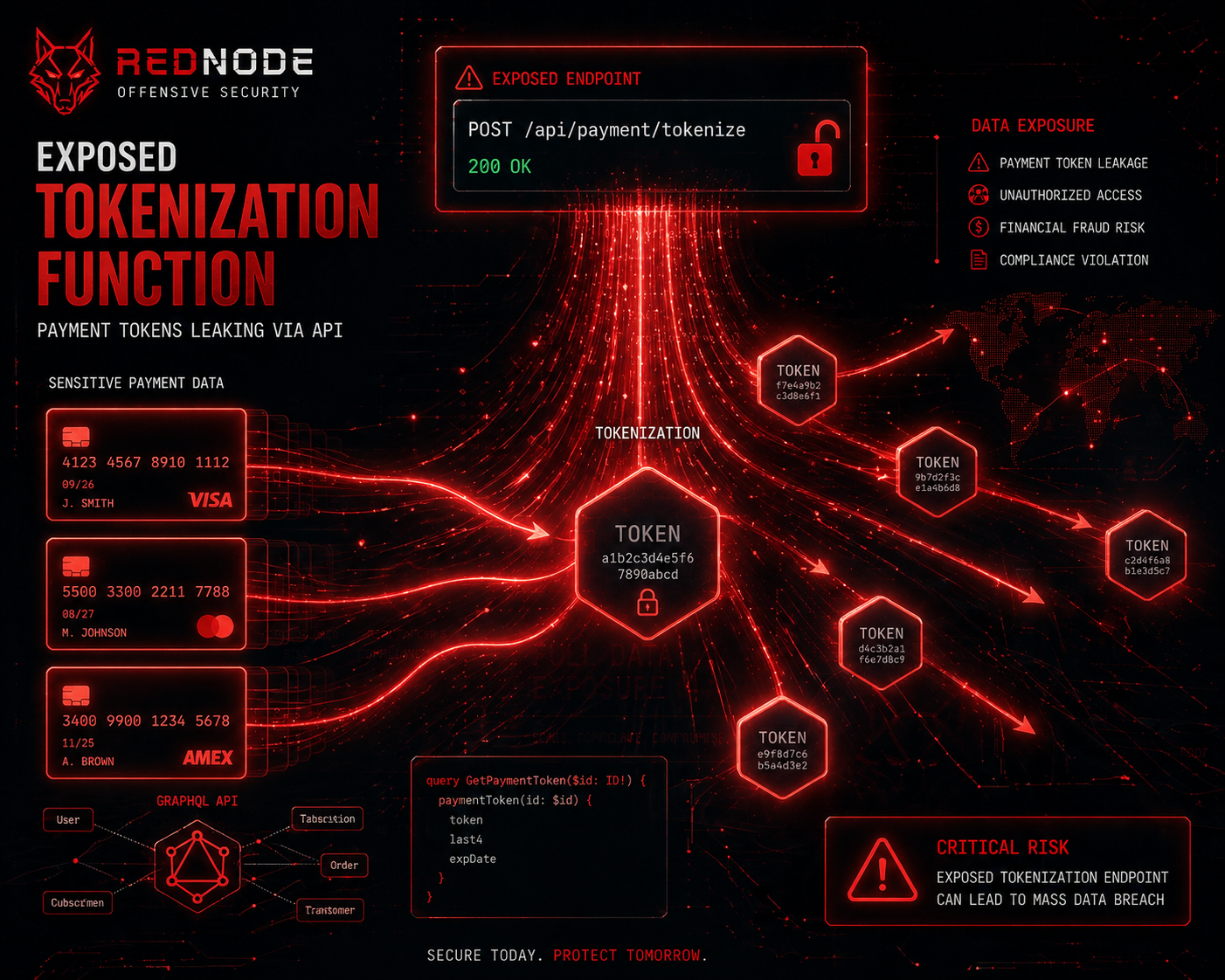
I recently came across a payment flow that exposed something it absolutely shouldn’t.
Not card data.
Not transactions.
The tokenization layer itself.
At first glance, everything looked standard:
• Modern payment provider
• GraphQL API
• Client-side integration
But one detail changed everything:
→ A sensitive function was accessible outside its intended flow.
What this enabled:
• Generating payment tokens without user/session context
• Repeating the process with no observable limits
• Using the system as a standalone tokenization mechanism
No checkout.
No validation.
No constraints.
Why this matters:
Tokenization is supposed to be a controlled step inside a secure payment flow.
When exposed incorrectly, it becomes:
→ a building block for abuse
→ a way to reduce friction in payment-related attacks
→ an expansion of the attack surface far beyond its intended use
The issue wasn’t “just exposure”.
It was a combination of:
• Trusting client-side authorization artifacts
• Missing access control on sensitive operations
• Lack of context binding (who / when / why)
• No rate limiting or abuse detection
This is a pattern I see more often:
Teams secure transactions…
but forget to secure the steps leading to them.
What actually fixes this:
• Move sensitive operations fully server-side
• Bind every action to user + session + intent
• Treat client-side tokens as untrusted
• Enforce strict usage limits and monitoring
Not every critical issue looks like a breach.
Sometimes it’s just a feature…
exposed in the wrong place.
If you're working with payments or API-driven checkout flows,
it’s worth validating not just what happens —
but where it can be triggered from.
1 reactions · 0 comments