Posted in AI Security
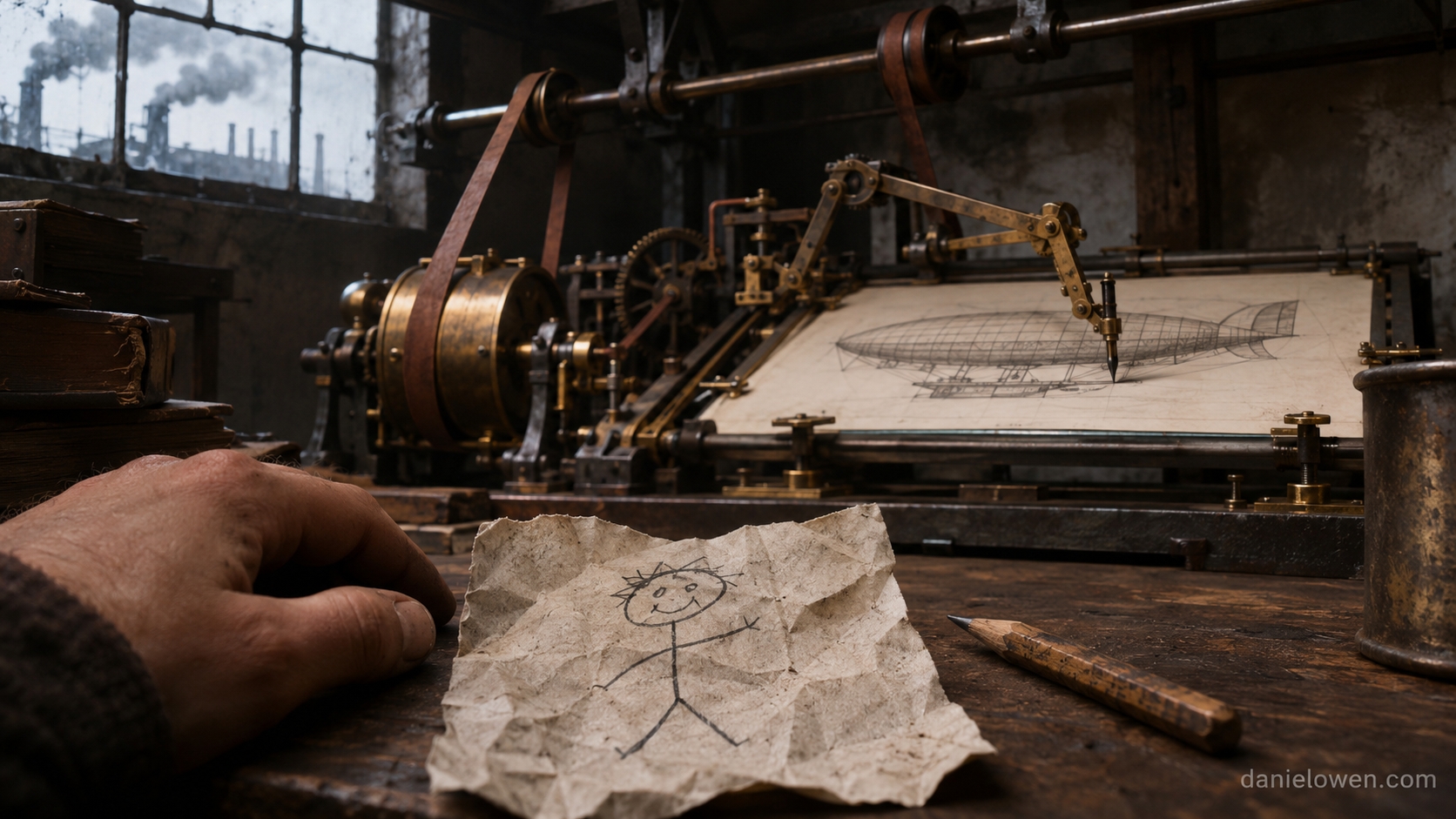
I fail three out of four attempts at drawing a stick person, and the art on this post is 100% AI generated…
Daniel O. — Senior Cybersecurity Consulting Engineer | EDR/XDR · Zero Trust · Architecture & Engineering | CISSP · CCSP · GIAC
I fail three out of four attempts at drawing a stick person, and the art on this post is 100% AI generated.
I use fairly extensive prompting, and some images take several re-prompts to turn out the way I want. In general the process works for my needs.
The art is one example of how I use AI. It makes me better at things I already do, and it lets me take on tasks I am completely unqualified for. I think the result is better overall. Each kind of use carries its own risks, and I explore some of them here.
This post was AI edited, though when I wrote this sentence it hadn't been yet. I frequently use AI, with a strong personalized writing prompt, to edit and occasionally rewrite what I have already drafted.
My goal is to keep my voice and thoughts my own. I look at AI editing kind of like having an editor following me around, which is a luxury I could not otherwise afford for a LinkedIn post or an email.
What I do not do is allow AI to draft communications. Well, mostly. I find even with a strong prompt, AI tends to be a bit verbose. Thorough is good up to the point the recipient refuses to read what I have written. Funny enough, I sometimes have the same issue with my own writing.
I say mostly because I do allow auto-drafting of some documentation files. I still do manual edits, but honestly, for technical writing, AI's verbosity can be a win. It includes steps I would leave out, because once I have worked with something long enough, they become second nature. Microsoft could learn from this left-out-step lesson in their technical walkthroughs.
I use AI heavily in my coding projects. I use different processes depending on whether this is work or a personal project, but both involve AI. Work still gets more hands-on review and hand-written code that I end up having beautified by an agent. I still believe anything done for a paying customer should get a human review.
Personal coding projects are mostly AI written, and heavily AI reviewed. AI even directs the work lanes, so I end up becoming a manager reviewing planning and work product rather than a collaborative coder. Most of my friends who are coders do this, but I can't bring myself to do that for client work. I have real worries about giving up this much control, but for the moment, I can't argue with the results. I'm now creating projects I would never have tackled due to scope or complexity.
That carries its own risk. As the projects get more complex, they can outgrow my ability to judge the work.
In several projects I have started using AI to prompt AI, with mixed results. On the positive side, this helps me make sure I get exactly what I am looking for by creating good guardrails. On the negative side, these generated prompts can be "too good" and end up limiting the worker AI in undesirable ways. When creating review prompts I have noticed that the AI is very good at creating prompts that cover exactly what it thinks needs to be looked at, saving wasted tokens but at the expense of coverage. I tend to mitigate this by doing rounds of very loosely scoped reviews between AI-generated reviews to allow the reviewer agent to run wild. This is an area I am still improving my skills in, and I use it to different extents depending on the task.
As I have written before, I have legitimate concerns about deskilling, but I also see areas where AI has improved my efforts. I believe my writing has improved, or at least I'm happier with my hand-written first drafts than I was a year ago. On the flip side, I struggle less with new coding tasks, so I do have my doubts as to whether the lessons learned will stick.
This post is very meta about my methods. Is it useful, or at least interesting? Is there any interest in more coverage of them?
3 reactions · 1 comments
Comments
Victor Font: Daniel, I think this is exactly the kind of practical discussion we need more of. Your observation that projects can outgrow your ability to evaluate the work is particularly important. AI allows us to accomplish things beyond our existing expertise, but that creates an interesting paradox: the more capable the tools become, the more difficult it can be to independently assess their output. I've e