Most modern applications don’t break because of missing authentication. They break because of something more…
Damian K. — Penetration Tester / Offensive Security Engineer
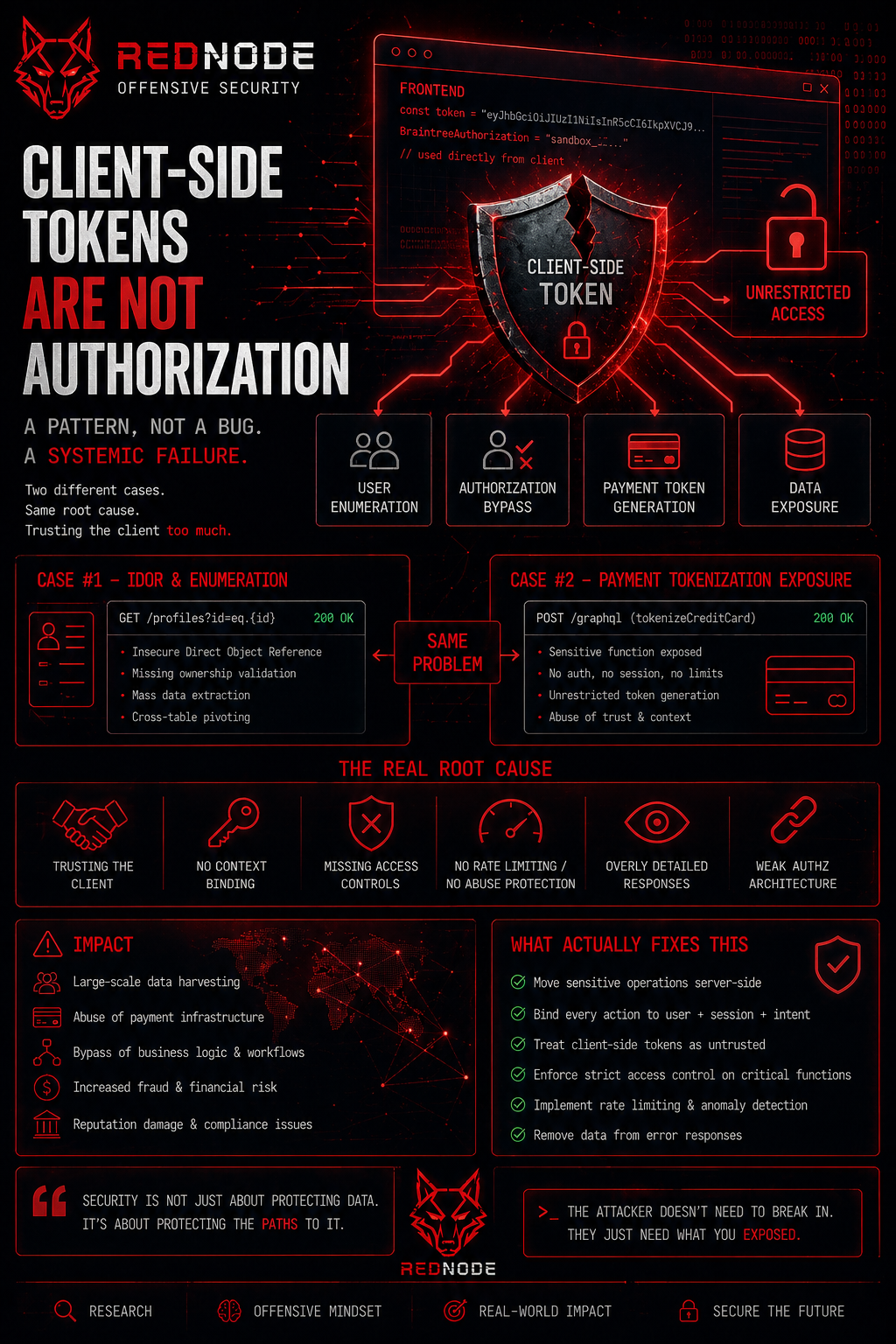
Most modern applications don’t break because of missing authentication.
They break because of something more subtle:
trusting the client too much.
I’ve recently worked on multiple cases where everything “looked secure”:
• valid tokens
• modern API stack
• structured responses
• proper status codes
And yet…
→ data was exposed
→ authorization could be bypassed
→ systems behaved consistently… but incorrectly
The common pattern?
Client-controlled context treated as truth.
What this leads to in practice:
• identifiers reusable across sessions
• tokens accepted outside intended flows
• inconsistent authorization decisions
• predictable backend behavior
• data leakage through “safe” responses
This is how small issues become critical:
→ A token is exposed
→ An identifier isn’t bound to a user
→ A request is accepted without context validation
Individually? Low risk.
Chained together?
Full attack path.
Attackers don’t care if your system is “secure” in isolation.
They test:
• where trust boundaries break
• where context is missing
• where logic can be reused
What actually matters:
• Every identifier must be tied to identity + session
• Every action must have context validation
• Client-side artifacts ≠ authorization
• Responses should not reveal internal logic
Most security issues aren’t about code.
They’re about assumptions.
And assumptions are exactly what attackers look for first.
1 reactions · 0 comments