Posted in Threat Intelligence
Just finished a SOC analyst CTF on DNS reconnaissance and network investigations, and it taught me something…
HOROIHEOMA C. — Cybersecurity Analyst
Just finished a SOC analyst CTF on DNS reconnaissance and network investigations, and it taught me something simple but important: an alert on an IP doesn’t mean the IP is malicious.
The scenario: investigate isc.org and the public IP 204.152.184.88 like a Tier-1 analyst.
What I did:
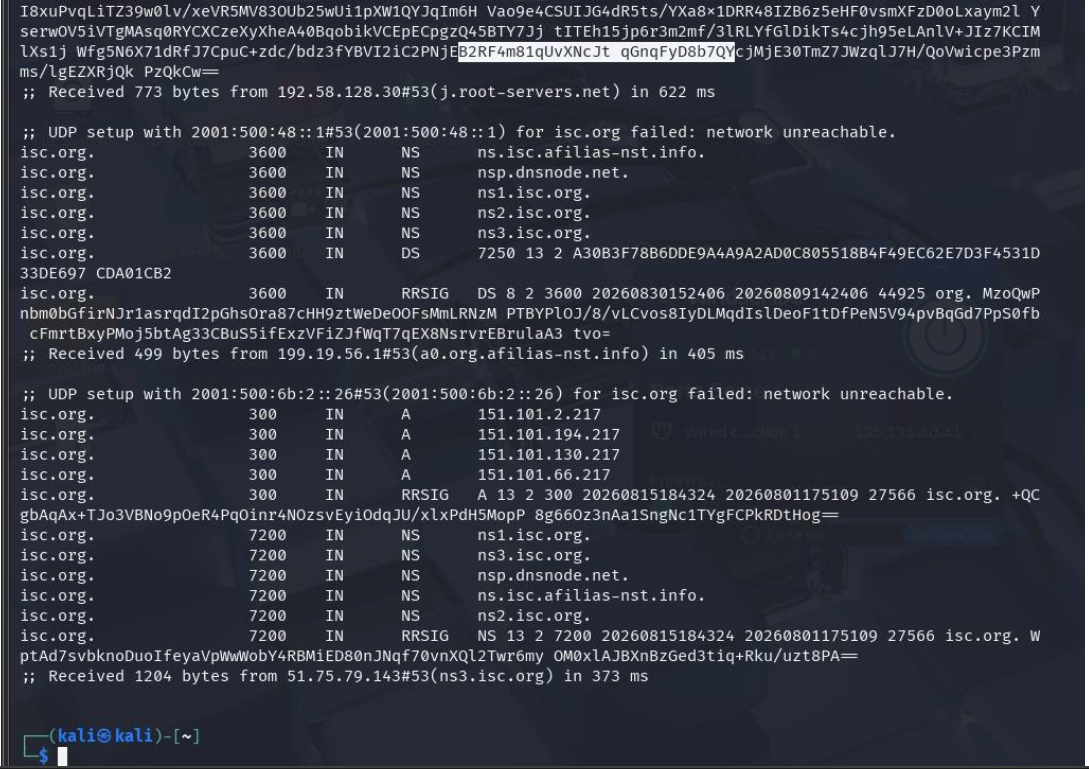
🔹 DNS recon: Used dig, nslookup and host to pull A, AAAA, MX and NS records. isc.org has 4 IPv4 and 4 IPv6 addresses, 2 mail servers and 5 name servers. I also found that www.isc.org sits behind a CDN (Fastly, 199.232.58.217), so the domain and the investigated IP aren’t necessarily the same web service.
🔹 Reverse lookup: The PTR query returned SERVFAIL, so I recorded “no result” instead of guessing.
🔹 Ownership and reputation: Checked ASN, geolocation, VirusTotal and AbuseIPDB. The IP belongs to ISC’s network (AS1280), and nothing pointed to malicious activity.
🔹 Exposure: An Nmap scan showed only ports 80 and 443 open, with everything else filtered. That’s normal for a public web service.
Result: Low risk. The better next step is to find out why the internal host contacted that IP, not to block it.
My full report is attached below 👇
#CyberSecurity #SOCAnalyst #BlueTeam #DNS #ThreatIntelligence #CTF
https://github.com/HoroChime/OPERATION-RESOLVE-TRACE-SOC-ANALYST-CTF-CHALLENGE-Horoiheoma
3 reactions · 0 comments
Topics: #ctf, #blueteam, #threatintelligence, #socanalyst, #dns, #cybersecurity