𝗧𝗵𝗲 𝗣𝗲𝗼𝗽𝗹𝗲 𝗧𝗲𝗰𝗵𝗻𝗼𝗹𝗼𝗴𝘆 𝗙𝗼𝗿𝗴𝗼𝘁 As a Zillennial who grew up with technology, I cannot imagine life without it…
Amina M. — Helpline Responder
𝗧𝗵𝗲 𝗣𝗲𝗼𝗽𝗹𝗲 𝗧𝗲𝗰𝗵𝗻𝗼𝗹𝗼𝗴𝘆 𝗙𝗼𝗿𝗴𝗼𝘁
As a Zillennial who grew up with technology, I cannot imagine life without it. I first used a computer before I had even finished learning my multiplication tables. That early exposure opened up a world of possibilities and shaped the person I am today. It also led me to assume that everyone's experience with technology was the same as mine.
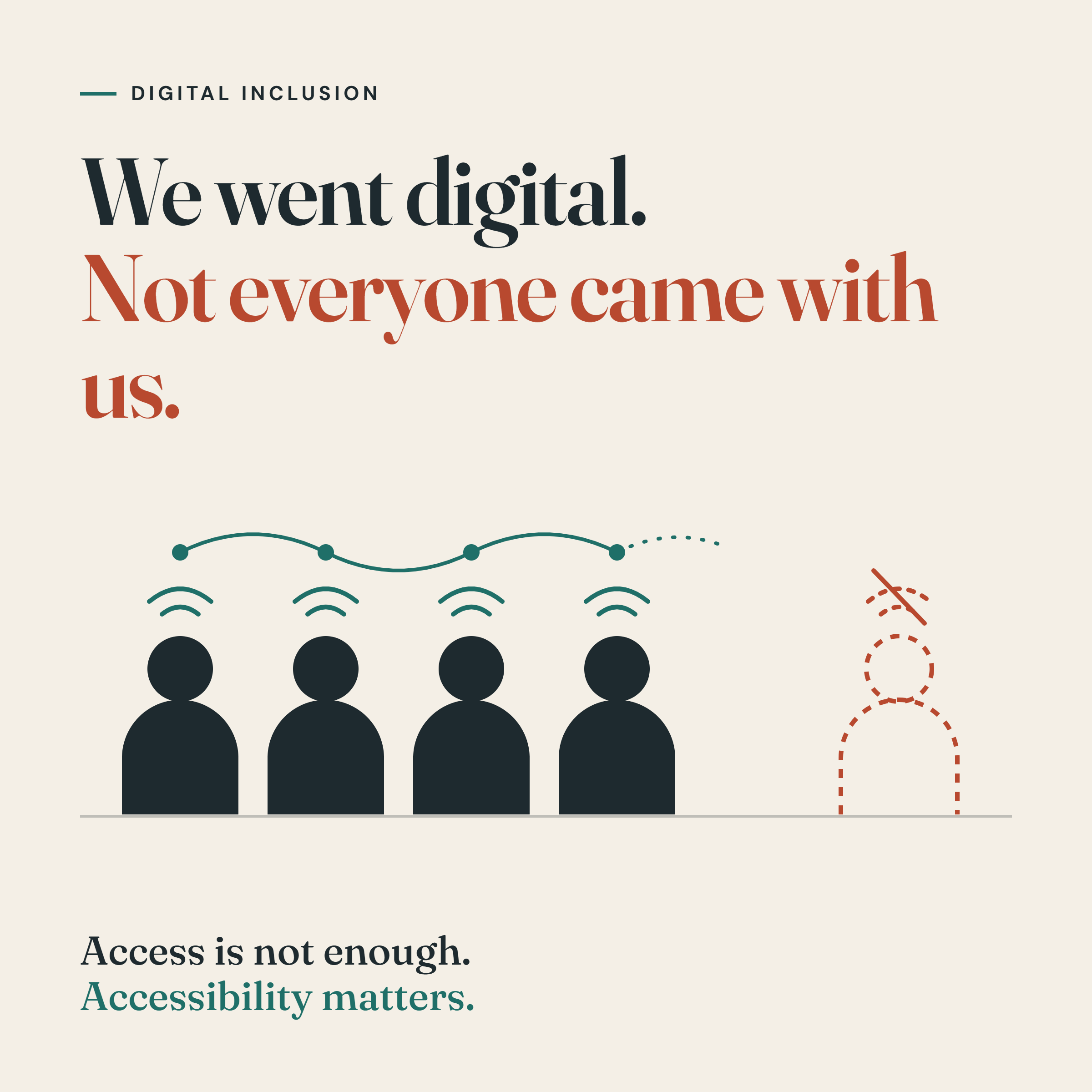
Since most people today own a digital device, it's easy to assume that everyone knows how to use one. I have come to realise this is far from the truth. Although technology is woven into our daily lives, not everyone has access to it, and many who do are not confident using it. The consequences can be tragic. In India, an 83-year-old man took his own life because he did not have a mobile phone to download the app he needed to access healthcare. This may be an extreme case, but it shows what can happen when we assume that everyone has equal access to technology.
We cannot talk about access without also talking about accessibility. Unfortunately, many technology creators make the same assumption: that users are confident with technology and will intuitively understand their applications. Even as someone who is comfortable with technology, I sometimes find certain apps difficult to use. I can only imagine how much harder it is for people with limited digital skills.
Booking a GP appointment, for example, should be simple. The move to online booking brings real benefits on the administrative side, but those benefits do not always reach patients. Removing every other way to book makes it harder for people with limited digital skills to seek medical care. It can also create privacy risks, as they are forced to rely on others, sharing personal health details in the process.
Cybersecurity adds another layer to the problem. As the threat landscape keeps evolving and people are pushed further into the digital world, their data and privacy are increasingly at risk. Expecting new users to already know what makes a strong password, or to follow basic security practices, can leave them overwhelmed, and overwhelmed users often give up on those practices altogether. The result is that the people least equipped to protect themselves become the most vulnerable to cyberattacks, often with no one to turn to for help.
As technology continues to evolve, making it accessible to everyone, whatever their ability, is essential. More effort must go into both providing access and teaching people how to use it with confidence. CatBytes CIC is one charity working towards exactly this, encouraging people who feel excluded from technology to embrace it and to ask for help when they need it. I am honoured to support their work in bringing people into a digital world that too often leaves them behind.
2 reactions · 0 comments